
Are there wallcovering words you need to know? If you want to be able to talk to designers like a pro, there certainly are. In her career as a designer and wallcovering expert, Rachel Kapner has heard enough industry jargon to last a lifetime. “I guess to me, they’re everyday words, right?” she says with a laugh.
So with a little help from Kapner—along with the Wallcovering Association and the Wallcovering Installer’s Association, we’ve gathered a list of 25 wallcovering words worth recognizing. You’ll likely get more use out of some than others. But when you find the opportunity to understand—or better yet use—one of them in conversation, won’t you look smart?
Wallcovering Words from A through F
Acoustical Wallcovering – you’ve likely seen soundproofing materials shown on television as squares of jagged foam, and that type might be appropriate someplace like a recording studio. But increasingly wallcoverings of various styles are available with flat backing made of foam, felt or other insulation material that helps absorb noise.
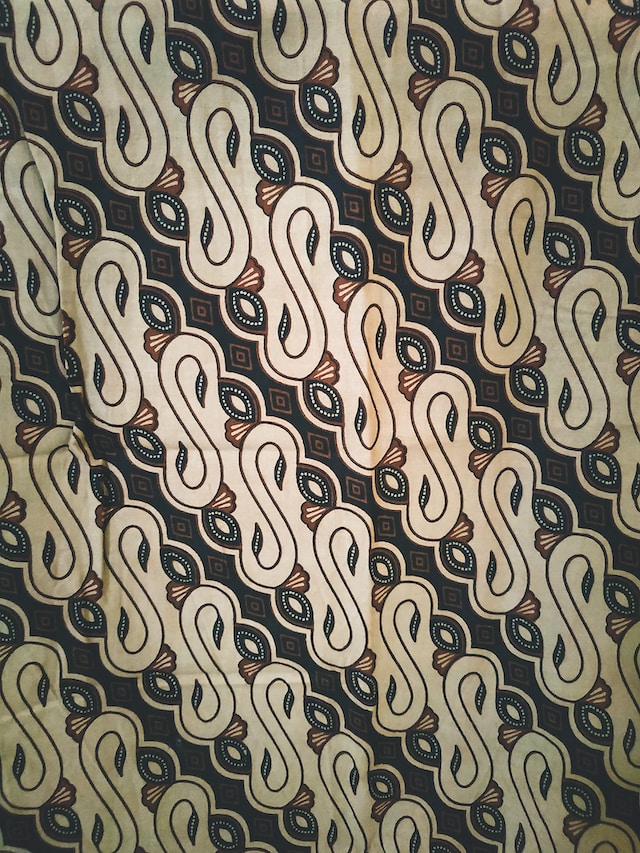
Batik – originally the name for an Indonesian technique involving the application of patterns in wax to cloth during dyeing (pictured above). The wax resists the dye, allowing multiple dye applications on the same textile. Today, the term is also commonly similarly East Indian-influenced, geometric designs used in textiles and wallcoverings, even when created synthetically.
Booking – a counter-intuitive sounding process that involves folding a strip of wallpaper back on itself after applying paste to it but before hanging. This allows time for the adhesive to soak into the paper while keeping it tacky until ready for application.
Dado – this most whimsical-sounding of wallcovering words refers to the wall space between the baseboard and the chair rail, which is a molding, wallcovering or other border that runs around the room at approximately the height of a chair back.
Fiberglass Wallcovering – this type of wallcovering can be controversial because of its higher price and the possibility fiberglass may cause skin irritation during processing or lung irritation during disposal. On the positive side, it is water and fire resistant, easy to clean, and prevents spores and mold from implanting. It’s also strong, durable and can often be painted over.
More Terms to Know from G through L
Grasscloth – prized for its texture, grasscloth wallpaper begins as natural materials such as cork, cotton, hemp, jute, vine, wool or grass (natch). The fibers are dried, woven and laminated—usually to paper backing—for application. But be wary when it comes to water; grasscloth can be very susceptible to marks from contact with water and even humidity.
Gravure – a type of printing (also referred to as Intaglio or Rotogravure) in which a hard, engraved cylinder is used to transfer a design or image to paper, where it appears recessed from the surface. It’s possibly best known in popular culture for appearing in the lyrics of the title song from the Judy Garland and Fred Astaire film Easter Parade.
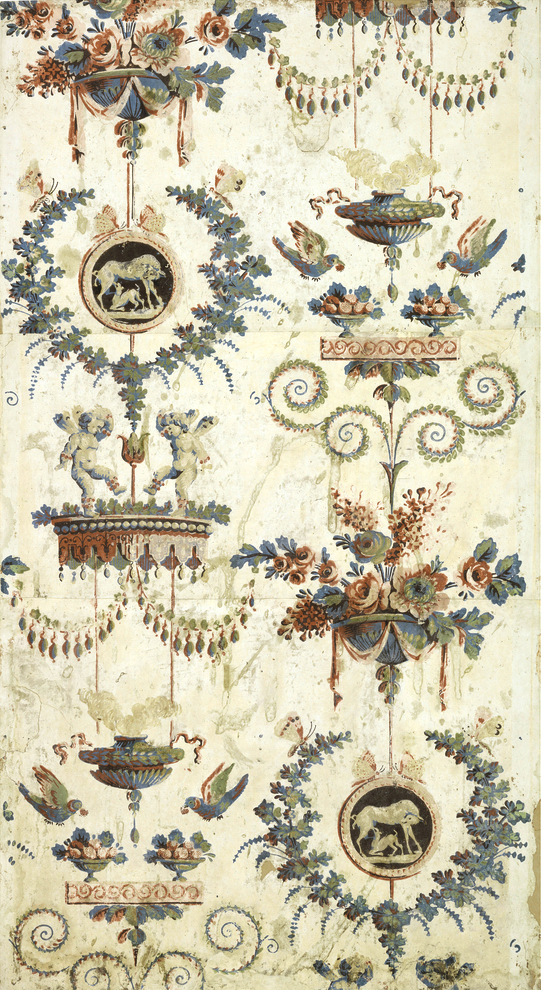
Hand Blocked – a precursor of modern surface printing, hand blocked wallpaper (see above) originally involved carving a wood print block, coating it with paint and pressing it along the length of the paper. More complex patterns could be achieved using multiple blocks with complementary designs, dipped in different colors.
Kill Point – less deadly than it sounds, it’s the place where the final strip of wallpaper will be hanged. With many patterns, it will be impossible to avoid a miss-match here. So canny installers will consciously choose an inconspicuous spot.
Lining Fabric – if you’re trying to avoid cracks in a plaster wall or are using a special wallcovering you’d like to be able to re-use, you might choose to apply this layer of muslin or canvas that offers a layer of protection between wall and covering.

Wallcovering Words from M through R
Open Time – you’ll want to keep an eye on this. It’s the time from the activation and application of your adhesives through when they’ll dry.
Pasted Leaves – an exotic wallcovering composed of dry tree or plant leaves mounted on material suitable for hanging, it tends to be very difficult and tricky to install at the corners.
Prep Coat – an acrylic coat that’s tacky when dry. This helps wallcoverings more easily adhere to surfaces and is also sometimes referred to as primer.
Raffia – a natural fiber derived from the leaves of the Raffia palm tree that’s been used since ancient times for activities from basketweaving to roofing. Versatile and durable, it can make a striking wallcovering, and Rachel Kapner points out the difference between raffia and similar grasscloth. “The idea is: it’s more crosshatch, so you get fewer seaming issues,” she says.
Random Match – A pattern that tends to match no matter how adjoining strips are positioned. Stripes (see above) are a good example.
More Terms to Know from S through Z
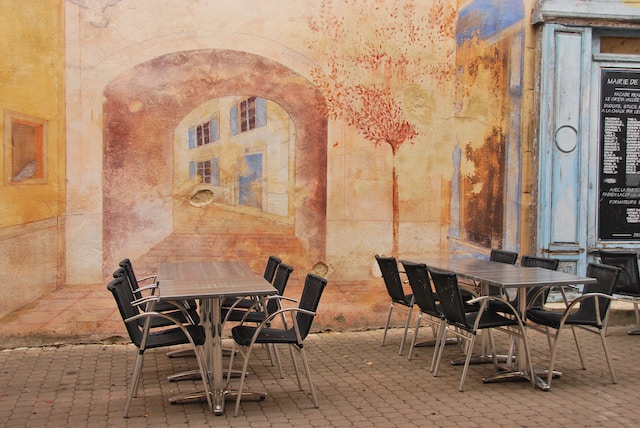
Trompe L’oeil – Derived from the French for “fool the eye,” a trompe l’oeil wallcovering creates an illusion of a three-dimensional setting that often transports the viewer to another time or place (see above).
Type – when referring to commercial grade wallcoverings usually reserved for high traffic public areas, wallcoverings are labeled Type I (7–13 oz per square yard), Type II (13–22 oz per yard) and heaviest duty Type III (22 oz and up).
VOCs – one of the key wallcovering words when it comes to discussions about sustainability, this is an acronym for Volatile Organic Compounds. Those are gasses that are emitted into the air by products such as adhesive as it dries. They can irritate the eyes, nose or throat; create ozone pollution; and even cause cancer. Choose options marked “Low VOC” whenever possible.
Wainscot – panel or woodwork that covers the dado (see definition above) of a wall. Its size usually equals about a third of a wall’s height.
Wide Width – ranging from just under 40 inches to over 55 inches, wide-width wallpaper may seem tricky to hang because of their sheer size. Fortunately, it tends to be “paste the wall,” which is easier to handle because the wallpaper isn’t as wet or sticky.
Need someone with whom to use your wallcovering words? See our guide to establishing a relationship with your designer.
Or put them to good use by getting excited about your next project with CWI design services.