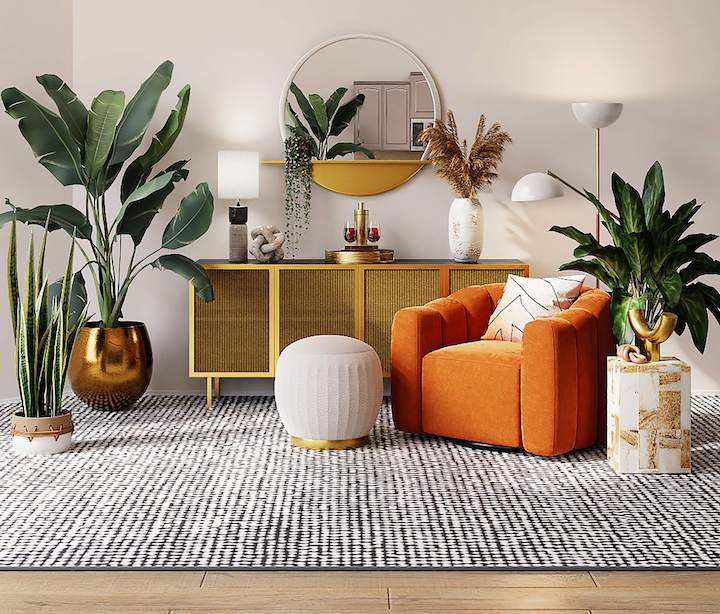
Using a plant in design—or at least a reasonable facsimile—can be a great way to bring a sense of life and texture to a room. “I personally don’t have a green thumb,” admits designer Rachel Kapner. So she finds herself often turning to faux or preserved flowers when attempting to make a room bloom.
But depending on the project, Kapner sometimes answers the call to go live. “For Mansion in May this year, the paper that I’m working around is a green background and has a little bit of fuschia in it. So I’m planning to do a live orchid in fuschia—something in the center of the table that will make you see the color from this paper. I think it’s a nice way to tie things together.”
Thus, in honor Kapner and anyone who considers themselves not adept at the art of plant parenting, we gathered five lower maintenance plants fit for those who’ve killed before. They don’t need much light or water. Some of them even seem to prefer neglect. And when they thrive, you can’t argue with the results. “It definitely softens and finishes the room without adding another piece of furniture or accessory,” says Kapner with a laugh, “if they do live.”

Consider this Cloud Cover-Loving Plant in Design
Why Aglaonema? A native of forest floors, Aglaonemas can be a boon when brightening spaces that are low on light—bringing not only vivid green but also perky pink to the scene.
How to Care for Your Aglaonema: Ideal sun exposure is diffuse light a few feet from a window, but some hardy Aglaonema can thrive even under fluorescent lighting. Make sure you’re using a pot allows for drainage, and leave about two weeks for your Aglaonema to dry out between waterings. You’ll know you’re overwatering if the leaves become limp and yellow. An Aglaonema is even the kind of plant you can forget about it for a while. So it makes an ideal gift for a friend who complains that they’ve got a brown thumb.

Feather Your Nest with This Fern
Why Bird’s Nest Fern? Also known as Asplenium nidus, it’s the plant world equivalent of Little Orphan Annie—delivering bouncy curls along the edges of their bouncy leaves.
How to Care for Your Bird’s Nest Fern: This is another one to keep away from the window sill, lest the sunlight scorch its leaves. But you can water it a bit more often than the Aglaonema—every week or two, allowing the soil to dry out about halfway down between waterings. Aim for less often outside the growing season in winter. Direct the water toward the soil at the edges of the pot to avoid rotting the roots at the center. And feel free to occasionally mist the fronds, which crave humidity.

Place Your Bets on a Chinese Money Plant in Design
Why Chinese Money Plant? Also known as UFO plants, pancake plants, lefse plants or missionary plants, Pilea peperomioides supposedly made their way to the West in the 1940s when a Norwegian missionary brought them home. Supposedly this explains their popularity in Scandinavian style.
How to Care for Your Chinese Money Plant: Well, first you’ll have to get one, which can be more difficult than you might expect. Since they’re not sold in many nurseries and plant centers, you’ll either need to source a start from a friend or order one online. Once acquired, place it in a pot with good drainage and water weekly, checking that the soil is dry to the touch first. This is another one to keep out of direct sun. However, they can stand temperatures all the way down to freezing. In fact, periods of colder temperatures may encourage them to flower.

Make a Good Impression with Philodendron
Why Philodendron? With bold, green, often heart-shaped leaves, the Philodendron is a stalwart favorite of the flora-challenged. You may recognize Philodendron from from the paintings of French impressionist painter Henri Matisse or from household poison warnings—more on that in a moment.
How to Care for Your Philodendron: Like other plants we’re considering today, Philodendron prefer indirect light (so they don’t require atrips to the window) and weekly watering (a bit less during colder months). Famously hard to kill, the Philodendron can also be easy to propagate. Almost any part with a root or air root can become a new plant once transferred to loose soil that drains well and is rich in organic matter.
But perhaps even more important than caring for the plant in this case is caring for the people around the plant. Philodendron may not be ideal for households with pets or young children. That’s because eating the plant can cause severe discomfort to the digestive tract, and even contact with its sap may irritate skin.

Hold Your Water for a Cactus Plant in Design
Why Cactus? Incorporate the otherworldly beauty of the desert into your design with a plant that’s set-it-and-forget-it, you can ignore it for months at a time.
How to Care for Your Cactus: Unlike the other plants on this list, cacti love direct sunlight. Find them a warm, sunny spot in your home and give it dry soil with more sand and rocks. They may even appreciate soaking up some extra rays during summer vacation. Take them outside for a spell when nighttime lows are above 50ºF.
Keep warmth-loving cacti away from air conditioners and other drafts. Err on the side of underwatering—only do it about every two weeks, even at the height of summer. If the plant starts to dry out—evidencing wrinkles at the base—a quick soak should easily revive it. Easier to care for varieties to seek out include hedgehog, golden barrel, pincushion, prickly pear and star cacti.
Have fun incorporating plants into your next design. And if you find yourself afraid to try because your brown thumb has failed oyu before, recall what musician Beth Ditto reminds us about the results: ““A beautiful plant is like having a friend around the house.”
While you’re bringing life to your space, try bringing some light to it, as well.
Can’t choose between a pincushion and a prickly pear? Consider engaging the support of CWI Design Services.